There has been plenty of talk about 5G RedCap as the connectivity profile that finally bridges the gap between legacy LTE and full 5G hardware. Now that talk has moved into real product territory.
Semtech has just launched the AirLink RX400 and AirLink EX400 routers — rugged, ultra-efficient devices built around 5G Reduced Capability (RedCap). These aren’t experimental proof-of-concepts. They are real, deployable routers targeting the kinds of IoT installations that truly need modern cellular technology but have been held back by power, cost, or complexity.
Where traditional 5G routers were designed for consumer broadband or heavy enterprise, and LTE was simply too old and constrained to keep long-lived IoT deployments viable, RedCap is the middle ground. And these new AirLink platforms take it seriously.
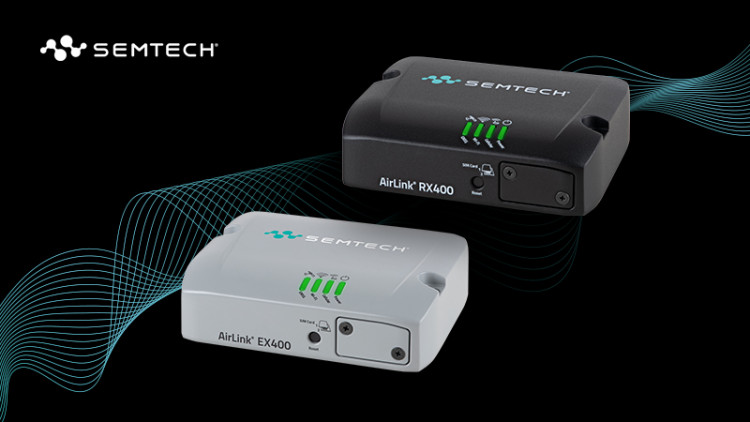
5G RedCap in Practice, Not Just on Paper
The fundamental appeal of 5G RedCap is that it keeps the networking benefits of 5G — modern spectrum access, longer support cycles, and better uplink and control plane efficiency — without the excessive power draw and cost of full 5G NR implementations.
Semtech’s new RedCap routers are built on this foundation:
- Ultra-low idle power, under 1 W when idle, enables deployments where power is limited — solar, battery, or remote sites without reliable mains.
- 5G RedCap with LTE fallback gives practical workability now while making RedCap the default path forward.
- 2×2 MIMO support delivers reliable throughput and RF performance without full 5G complexity.
- Targets real IoT connectivity needs — monitoring, backhaul, telemetry, remote control and edge access — without over-engineering.
The result is a class of routers that can finally replace LTE in scenarios where operators are phasing out legacy networks, without the penalties of traditional 5G gear. For IoT architects pondering the transition from LTE Cat-4 to future networks, this is an important new option.
Two Flavours: Rugged and Semi-Rugged
The launch isn’t a single SKU but a pair of products geared toward slightly different deployment realities.
AirLink RX400 — Rugged RedCap Router
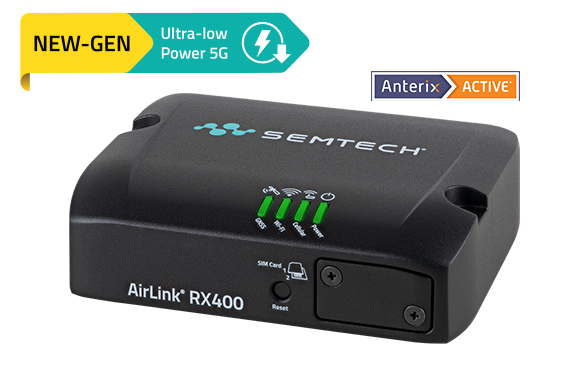
This is the heavy-duty option. Built to withstand environmental extremes, it is designed for:
- Utilities and energy infrastructure
- Oil, gas, and mining operations
- Outdoor critical infrastructure monitoring
- Off-grid sites with battery/solar power
With rugged housing and a design suited to harsh environments, the RX400 brings 5G RedCap to places where power is at a premium and maintenance trips are costly. It’s essentially a rugged connectivity hub, not just a router.
AirLink EX400 — Semi-Rugged Commercial IoT Router
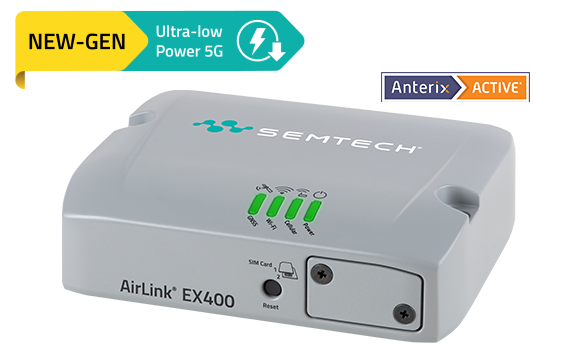
The EX400 is optimized for commercial and industrial environments where toughness is needed, but the conditions aren’t punishing:
- Warehouses and manufacturing floors
- Retail and logistics hubs
- Smart agriculture and facilities
- Indoor or protected outdoor sites
Its semi-rugged build, efficient power use, and 5G RedCap performance make it ideal where reliability and cost efficiency matter most.
Both models come with network management capabilities designed for scale — remote monitoring, configuration, firmware management and security features that reduce total cost of ownership and operational overhead.
What This Means for Industrial IoT
Today’s landscape is messy for IoT connectivity planners.
Legacy LTE is approaching the end of its support lifecycle in many markets. Rolling out full 5G hardware everywhere just to future-proof connectivity is expensive and often unnecessary. Meanwhile, many industrial and distributed IoT projects are constrained by power budgets, remote siting, or both.
These new RedCap routers create a viable alternative:
Power-constrained environments — sites with solar panels or long battery life limitations finally get modern cellular connectivity without burning through energy budgets.
Long deployment cycles — mission-critical systems that need connectivity for five to ten years can move to a path that doesn’t go obsolete as LTE phases out.
Real world throughput — enough bandwidth and low latency for telemetry, control, and even modest video/edge data transport without overpaying for capabilities never used.
Instead of “5G because it’s next,” these routers enable “5G because it’s right for the application.”
Why This Matters Now
IoT deployments don’t live on carrier timetables. They live on project deadlines, power realities, site access calendars, CAPEX constraints and operational budgets. What has been missing is a way to get modern cellular connectivity that:
- Won’t cripple your power budget
- Won’t become obsolete before the end of your deployment cycle
- Works today and scales into future network evolution
5G RedCap is that path. And these latest AirLink products are early examples of what happens when a vendor actually designs hardware around the use cases, not around the marketing slogans.
Semtech: Background You Can Bank On

Semtech isn’t a fly-by-night networking brand chasing the latest buzzword. It is a technology company with decades of experience in connectivity and industrial networking.
Its legacy includes foundational semiconductor platforms, long-lived IoT radio technologies, and rugged communications hardware used in utilities, public infrastructure, transport and industrial systems. This isn’t consumer networking repackaged. It is gear built for environments where downtime isn’t just inconvenient — it’s expensive or dangerous.
The AirLink family has long been recognised in rugged industrial cellular connectivity. These new 5G RedCap models extend that pedigree into the next generation of cellular standards, with real attention paid to efficiency, service life, and network transition.
For anyone responsible for industrial IoT connectivity strategy — energy, utilities, remote monitoring, infrastructure — that pedigree matters almost as much as the technology itself. You want a supplier who understands why routers fail, not someone who hopes they won’t.
Frequently Asked Questions (FAQ)
What exactly is 5G RedCap?
5G RedCap (Reduced Capability) is a defined profile of the 5G standard that pares away the complexity and excess performance of full 5G hardware. It retains modern radio capabilities and long-term network support but without unnecessary cost and power draw, making it ideal for IoT and industrial use cases where extreme speed isn’t needed. For more information read our What Is 5G Redcap? page.
How is RedCap different from LTE or full 5G?
LTE is ageing and has limited long-term support, while full 5G is often overpowered and power-hungry for typical IoT. RedCap sits between the two: it uses modern 5G spectrum and protocols but in a way tuned to efficiency and durability, not consumer peak performance.
Why is low power consumption important for IoT routers?
Many IoT systems run on constrained power budgets — solar, battery backups or weak grid power. Traditional 5G routers are too power hungry for these environments. With idle power under 1 W, RedCap devices can run longer and reduce overall system costs.
Where does RedCap make the biggest difference?
Remote infrastructure, utilities, environmental monitoring, agriculture, commercial IoT and any deployment where power is limited, access is difficult, and long-term connectivity is a requirement benefit most from RedCap.
Can RedCap handle “real” data loads?
Yes. RedCap isn’t about maximum speed. It’s about “right-sized” throughput — fast enough for control, telemetry, sensor backhaul, modest video feeds and edge data — without unnecessary complexity.
Are these routers future-proof?
For industrial lifecycles, yes. RedCap has been codified in modern standards and carriers are rolling RedCap support as part of network evolution. The dual-mode approach with LTE fallback also smooths transition from current networks to future ones.
Do these replace full 5G routers?
Not in every case. If your application truly needs multi-gigabit throughput or ultra-wide carrier aggregation for consumer broadband, full 5G still makes sense. RedCap is about optimised IoT performance, not peak speed.
Do I need special SIMs or network access for RedCap?
RedCap operates on standard cellular network infrastructure where carriers support it. In most cases you can deploy with regular business IoT SIMs and carrier plans, provided the network has RedCap availability in your region.
In short: this launch marks a turning point — RedCap has moved from clever specification to practical deployment. Industrial IoT finally has a 5G option that respects power, cost, and real life operational constraints. If you’re planning future-proof connectivity that isn’t weighed down by full 5G cost or the coming LTE sunset, these new routers should be on your radar.
Leave a Reply