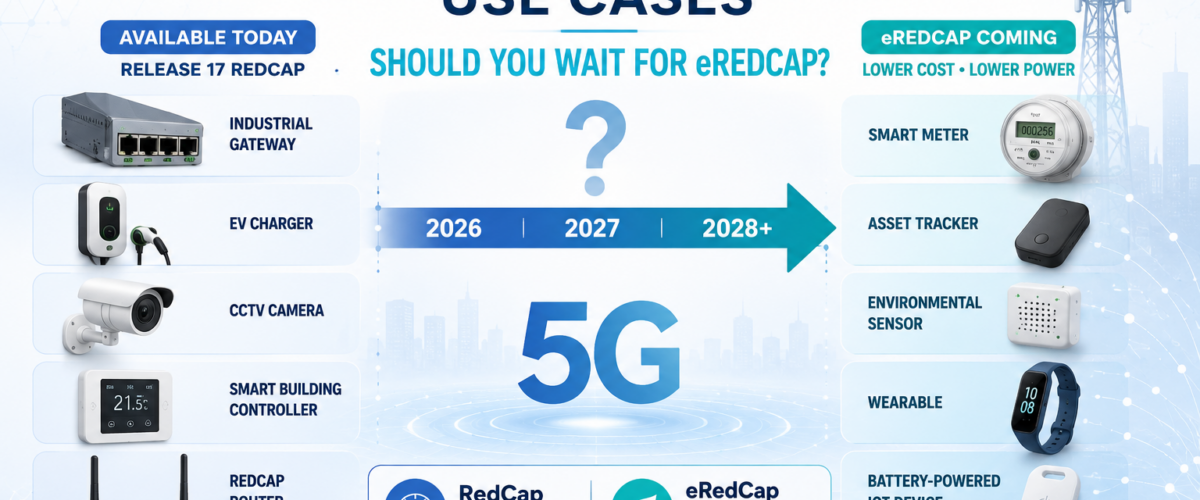
Most of the coverage around 5G RedCap focuses on industrial IoT. Smart meters. Asset trackers. SCADA systems. That framing is accurate – those are the primary deployment targets for Release 17 RedCap – but it is already too narrow.
A product that turned up on Amazon UK this week makes the point better than any analyst report.
The GL.iNet Comet 5G – a remote KVM with 5G RedCap connectivity
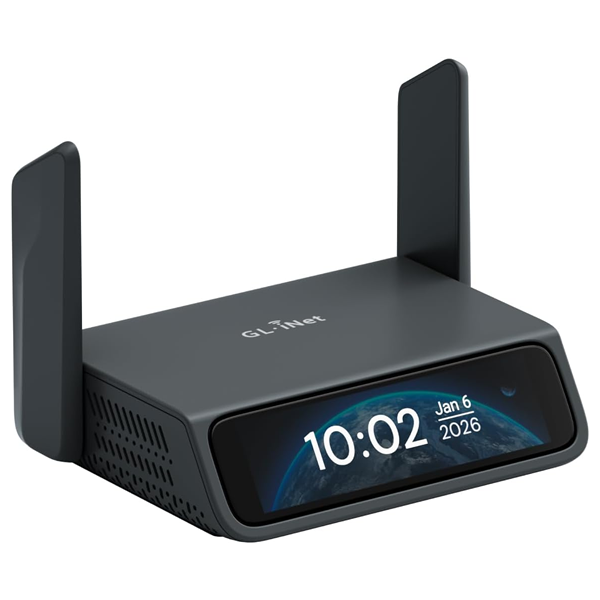
The GL.iNet Comet 5G (GL-RM10RC) is a remote KVM device. KVM stands for Keyboard, Video, Mouse. Connect it to any computer or server and you can control that machine from anywhere in the world – at BIOS level – as if you are sitting directly in front of it. No software agent on the target machine. No dependency on the host operating system. BIOS, boot sequence, OS reinstall, crash recovery – all of it, remotely, from a browser.
The hardware spec is not toy-grade. 4K HDMI passthrough at 30fps with H.264 hardware encoding, 30-60ms latency, Wi-Fi 6, a 3.69″ touchscreen display, 64GB eMMC storage, Tailscale support. The failover stack runs Ethernet first, then Wi-Fi, then cellular – automatically. It costs £287.99 and ships tomorrow on Prime.
The cellular connection is 5G RedCap with global 4G LTE fallback.
That last detail is what makes this worth writing about.
View the GL.iNet Comet 5G on Amazon UK – £287.99
Why 5G RedCap is the right connectivity for this device
The Comet 5G does not need gigabit throughput. It needs a management channel that is always available, runs independently of the site’s primary network, and does not consume significant power sitting idle between incidents.
That is precisely the profile 5G RedCap was designed for. Low power, modest bandwidth, always-on, 5G SA infrastructure. The device does not care about the theoretical peak speeds of full 5G NR. It cares about being reachable when everything else has failed.
If the site’s primary internet connection goes down – the exact moment you most need remote access – the Comet 5G’s RedCap connection is unaffected. It is on a completely separate network path. That independence is the point.
The use cases this opens up
Remote KVM with cellular fallback is not a niche product. Think about the range of scenarios where this matters.
IT infrastructure management. Any organisation running physical servers – colocation, edge computing nodes, branch office hardware – that has ever had a site visit driven by a hung BIOS or a failed OS boot. The Comet 5G turns that into a browser session. The cellular fallback means the management channel survives the failure that triggered the problem in the first place.
Broadcast and live events. AV engineers and broadcast technicians managing equipment at remote venues. Historically this requires either a site visit or a support engineer travelling to location. With a device like this, the senior engineer can access the hardware remotely while local staff handle the physical environment.
Retail and hospitality. Back-office servers and point-of-sale systems at distributed sites. IT support without a road trip every time a Windows update breaks something at 2am.
Critical infrastructure. Substations, BESS sites, water treatment facilities. Anywhere that has servers or controllers managing physical processes, where remote BIOS-level access on an independent network path is not a convenience – it is a resilience requirement.
Home office power users and IT professionals. Managing a homelab or a client’s server remotely. The cellular fallback means you can get in even if their broadband is the problem.
This is not a list of industrial IoT use cases. It is a list of IT and infrastructure management use cases. The 5G RedCap connectivity is an enabler for a device that serves a broad market – from enterprise IT teams to individual consultants to broadcast engineers.
What this signals about RedCap’s trajectory
The industrial IoT framing of RedCap made sense when the technology was being defined and the early hardware was industrial-grade modules priced for high-value deployments. That phase is passing.
The Comet 5G is a consumer-adjacent product. It is sold on Amazon. It has a glossy product listing with lifestyle imagery. It costs less than a decent managed switch. The target buyer is not just an OT engineer specifying SCADA hardware – it is an IT professional, a managed service provider, a technically capable individual who wants remote access resilience.
A conversation with a module manufacturer recently reinforced the direction of travel. The United States and much of Asia have moved quickly on 5G RedCap adoption – the network infrastructure is there, the devices are in deployment. Europe and the UK are behind. Most RedCap devices in the UK today will run on 4G LTE Cat 4 fallback until 5G SA coverage reaches their deployment location. That changes through 2026 and 2027 as EE, Vodafone and O2 progress their RedCap commercial launches.
But the hardware is not waiting for the networks. It is already here, it is already on Amazon, and it is already serving use cases that have nothing to do with smart meters.
The real move is eRedCap
Release 17 RedCap is the starting point. The larger opportunity is eRedCap – the 3GPP Release 18 standard that takes the complexity reduction further, targeting the hundreds of millions of LTE Cat-1 devices due for replacement from 2026 onwards.
Where Release 17 RedCap targets wearables and industrial sensors with peak downlink around 150 Mbps, eRedCap reduces further to approximately 10 Mbps – directly comparable to LTE Cat-1 – using a 5 MHz channel bandwidth and a single receive antenna. Lower cost, lower power, designed for mass-volume IoT and M2M devices on 5G SA infrastructure.
The implication for the consumer-adjacent market is significant. eRedCap chips are expected to reach comparable cost to current LTE Cat-1 modules. At that price point, cellular connectivity becomes viable for a much broader range of devices – not just high-value industrial hardware, but volume consumer and prosumer products where a £5 modem is feasible and a £50 modem is not.
A remote KVM device using eRedCap connectivity instead of Release 17 RedCap would be cheaper to build, lower power in standby, and still always-on. The same logic applies to home security panels, smart appliances, building management controllers, vehicle telematics for the mass market.
The distinction between RedCap and eRedCap matters here. RedCap is where the hardware story starts. eRedCap is where it scales.
Other RedCap hardware spotted on Amazon UK
The Comet 5G is not alone. Searching Amazon UK today turns up several other RedCap devices – evidence that the supply chain is genuinely moving, not just press release activity.
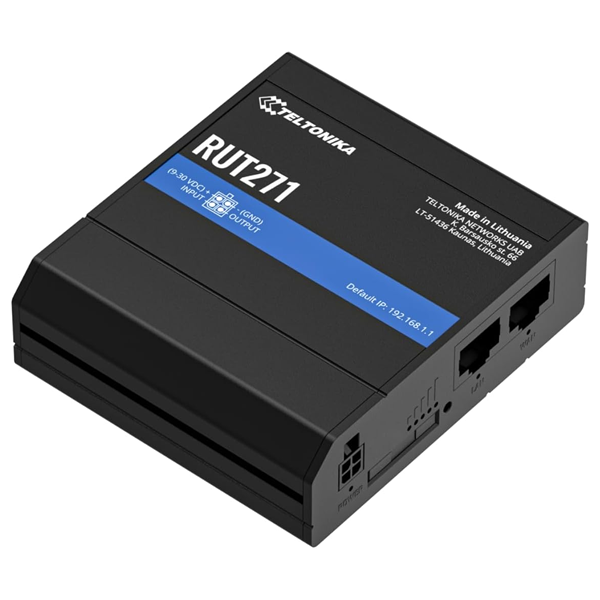
Teltonika RUT976 – industrial RedCap router with dual SIM, RS232/RS485, GNSS, four Ethernet ports, DIN rail mount, -40 to 75°C. Full industrial deployment spec with RMS management and Modbus/DNP3 support. View on Amazon
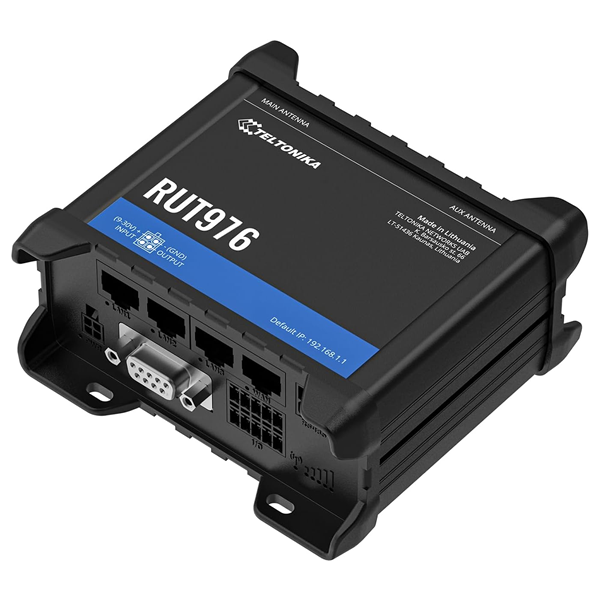
Teltonika RUT271 – the compact version of Teltonika’s RedCap range. 83 x 25 x 74mm, aluminium housing, same RedCap/Cat 4 modem as the RUT976 but slimmed-down interface set. Two Ethernet ports, Wi-Fi 4, RS232. Aimed at EV charge points, smart meters, kiosks and transport cabinets where space is tight. View on Amazon
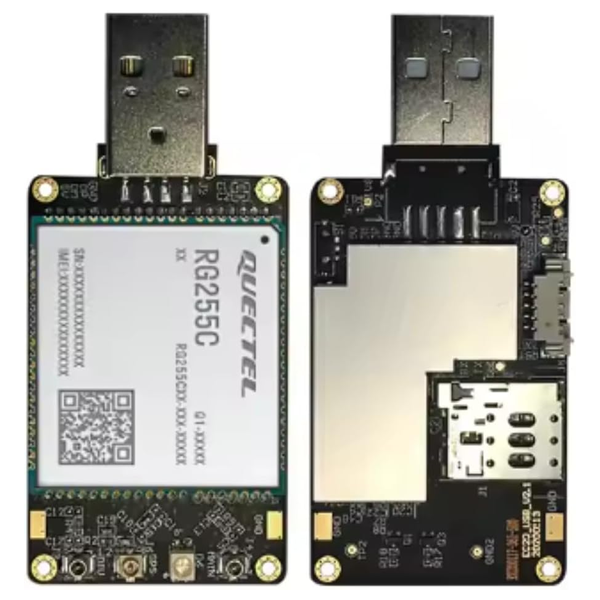
Quectel RG255C – a bare M.2 RedCap module for integrators. Qualcomm Snapdragon X35 chipset, 5G SA sub-6GHz, AT command compatibility with earlier Quectel SIM series modules. The fact that a developer component like this is available on Amazon UK at all is a supply chain signal worth noting. View on Amazon
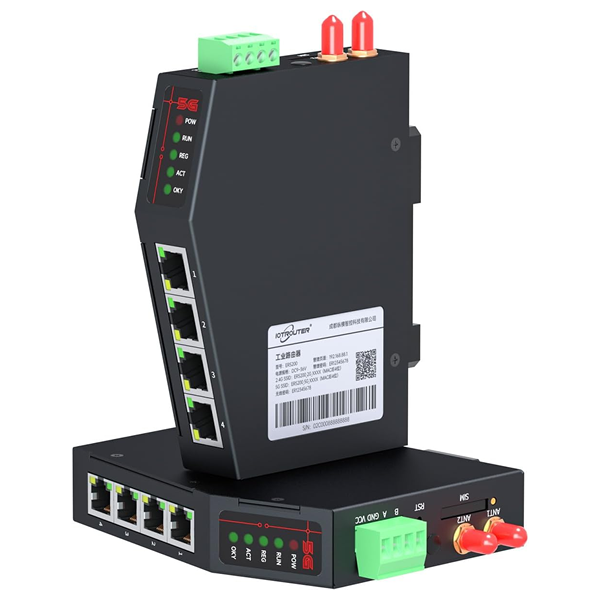
IOTRouter ER5200 – an industrial router/DTU combination in a single DIN-rail unit. RS485, Modbus RTU/TCP, MQTT, JSON, 9-36V DC, -40 to 80°C. Aimed at SCADA and remote telemetry where you need serial data collection and IP routing in the same box. View on Amazon
The industrial IoT story for RedCap is real and it is important. But the Comet 5G is a reminder that the standard is not constrained to that vertical. Wherever a device needs an always-on, independent, low-power cellular management channel – and that description covers a lot of ground – RedCap is the right fit.
When eRedCap hardware reaches LTE Cat-1 price parity, the ground it covers will expand considerably.
Peter Green writes about 5G standards, IoT connectivity and cellular hardware. Links to Amazon products in this post are affiliate links. All prices correct at time of writing.
Leave a Reply